
CIOReview APAC Weekly Brief
Be first to read the latest tech news, Industry Leader's Insights, and CIO interviews of medium and large enterprises exclusively from CIOReview APAC
A featured contribution from Leadership Perspectives: a curated forum reserved for leaders nominated by our subscribers and vetted by the CIOReview Advisory Board.

ADM
Reimagining And Revolutionizing The It Industry
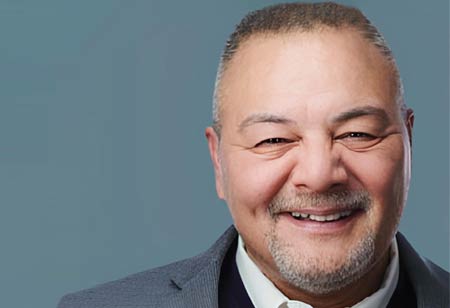
With broad exposure in delivering cutting-edge solutions to challenging technical problems, Lee Patsel excels at aligning people and the IT department for the rapid execution of IT solutions. Over the course of his career, Pastel has been recognized for leading the growth of the Global Community Practice and for directing the Source2Pay service team, which created an IT services management model. Currently, Lee Patsel holds the position of senior manager at Global Business Service.
Please tell our readers about your current roles and responsibilities in the organization.
So as a service management and governance manager, I am responsible for overseeing the business process outsourcing relationship, ensuring we have the right performance metrics in place to monitor, and also administering and establishing service level agreements for different services that we offer. I also focus on setting up digital transformation strategies and exploring new industry shifts and innovations to stay competitive at a cost-toserve level in the industry.
"Technology has enabled the democratization of tasks enabling other parts of the corporation to execute tasks that were previously reserved for IT professionals only"
Can you shed some light on the upcoming trends in the industry?
Process automation is one of the prominent trends you can find latest in the industry. We can also find a growing interest in process discovery which includes process mining and task mining and intelligent document processing which improves processes and make them more efficient. But the latest trend is machine learning, which is making waves in the industry. However recent innovations like ChatGPT have created concerns in people regarding its implications. By leveraging these discoveries, Global Business Services, as a service-based organization will be extremely beneficial in terms of how well we provide services to the enterprise and customers.
Can you talk about the future of automation in the industry?
I guess the greatest focus in the industry is to increase productivity and efficiency without compromising quality and speed. And one way to achieve this is by eliminating the human dependency on certain processes. We understand human beings are often inundated with communication and multiple tasks. Therefore, it is hard to stay focused enough to be super responsive in the same way that automation can be. Automation can be a better option for many tasks that do not require human decision-making. For example, tasks such as data entry, data clicks, and data extraction are tasks that need not be performed by human beings. Automating such tasks gives the company much more freedom for acquisitions and growth. This allows a company to scale and grow while reducing the cost footprint per transaction.
How do you envision the future of the industry in the next 12- 24 months?
The greatest barrier in business currently is the divide between IT and other functions. IT is seen as the greatest protector of assets. Various levels of attacks are being delivered, including internal threats within an enterprise, on the security front. However, this has made IT a risk-averse machine that slows down business operations hindering them to stay ahead in market ships.
It is likely that companies will need to rethink their internal IT operating model in the coming years, in order to allow other parts of the corporation to complete tasks that were previously only performed by IT professionals. Technology has enabled the democratization of tasks enabling other parts of the corporation to execute tasks that were previously reserved for IT professionals only. The challenge for IT over the next few years is to become much more of an enabler and a consultative thought leader to help these functions serve themselves. IT would figure out ways to utilize the technology developed to execute certain functions while them focusing on complex and other higher-risk tasks.
What would be your piece of advice to your fellow peers?
My piece of advice would be to stay committed to our strategy and view IT as a partner rather than an impediment. The area we fall short of is in providing IT organizations with our needs and strategies. We need to partner with IT more closely and encourage them to rethink the mission, and goals and create an environment where less complex tasks can be dealt with by the corporation as a whole instead of waiting for IT to deal with them. My goal is to encourage IT professionals, organizations, and leaders to find ways to serve differently within an organization without foregoing any controls and sacrificing risk management but finding ways to multiply productivity.
